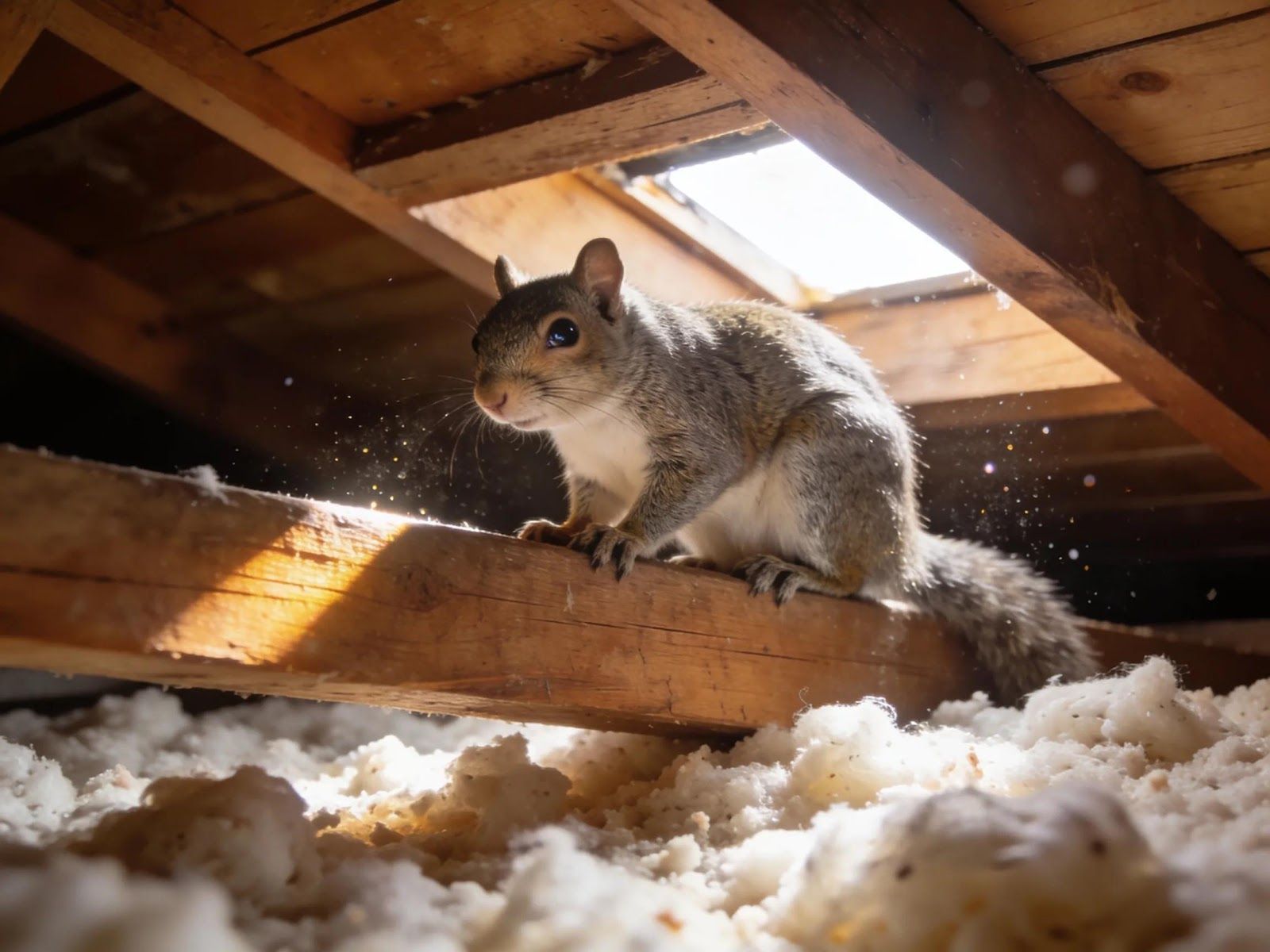


How to identify entry points for squirrels in attic spaces
Hearing scratching above your ceiling at dawn is stressful, and it's a clear sign that wildlife found a way inside. In heavily wooded North Georgia neighborhoods, mature tree canopies give squirrels easy access to rooflines and small builder gaps. In this guide, you'll discover how to pinpoint hidden entry points along roof valleys and soffits, determine what species is active from acoustic cues, and learn when to contact Catch A Critter - Wildlife Removal Specialists for humane squirrel removal to protect your property.
TL;DR:Key takeaways for Forsyth County homeowners
- Listen for daytime scurrying to identify eastern gray squirrels, or midnight movement to spot a colony of flying squirrels.
- Check roof transitions, builder gaps, uncapped ridge vents, and weathered fascia boards first.
- Solve the issue permanently with one-way eviction doors and chew-proof steel barriers rather than temporary traps.
Identify the species and acoustic patterns
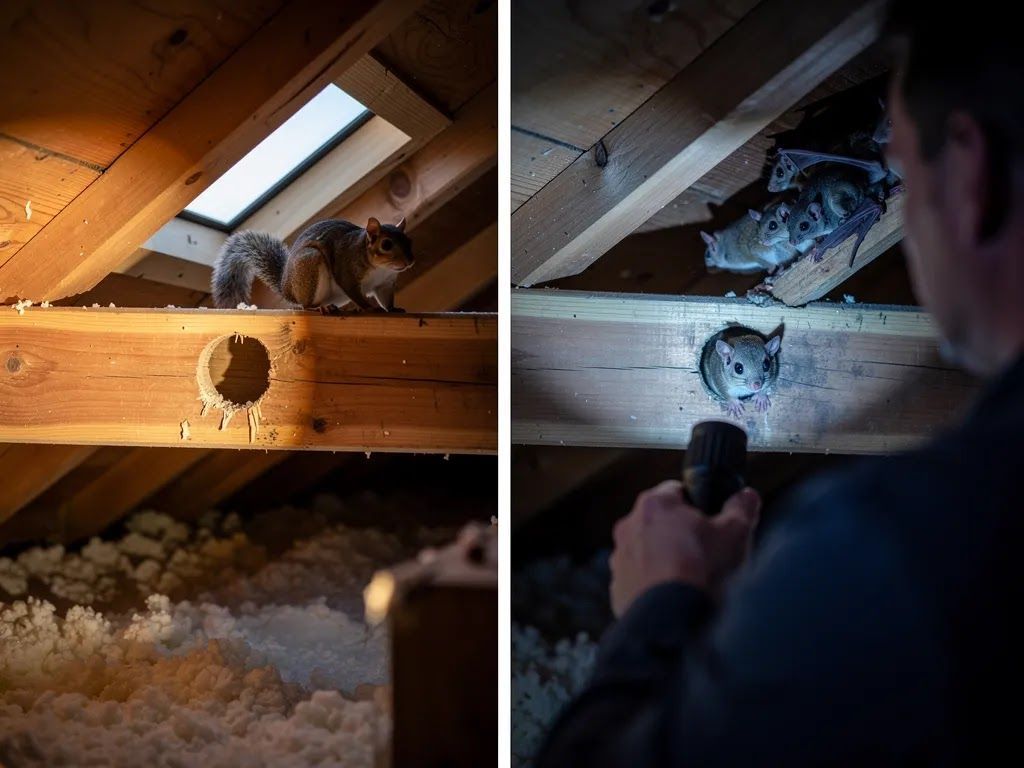
Early morning scurrying indicates daytime gray squirrels, whereas midnight running patterns reveal nocturnal flying squirrels.
| Diagnostic Factor | Eastern Gray Squirrel | Southern Flying Squirrel |
|---|---|---|
| Activity Schedule | Daytime (Early Morning & Late Afternoon) | Nighttime (Midnight–4:00 AM) |
| Entry Hole Size Needed | 1.5 to 2 inches (Tennis ball diameter) | 0.5 to 1.25 inches (Quarter diameter) |
| Social Grouping in Attic | Individual adults or mother with litter (2–4 kits) | Communal nesting colonies (10–20+ individuals) |
| Primary Entry Locations | Fascia boards, gable louvers, roof corners | Builder gaps, uncapped ridge vent ends |
Knowing which critter is visiting your attic determines the right exclusion approach and sealing requirements to solve the problem safely.
Eastern gray squirrels follow a daytime routine, with peak activity around sunrise and before sunset. You'll hear distinct scampering as adults head outside to forage. Outside of spring and late-summer nesting periods, adult gray squirrels are solitary, though a mother may nurse 2 to 4 kits in your insulation.
Southern flying squirrels are strictly nocturnal and live in social, communal groups. If you hear light tapping or rolling sounds in the middle of the night, you likely have flying squirrels nesting together. An adult gray squirrel needs an opening around 1.5 to 2 inches, while flying squirrels slip through gaps as small as half an inch.
Inspect common architectural entry points
Roofline intersections, builder gaps, soffit returns, and ridge vents represent the most common access points on North Georgia homes.
| Architectural Vulnerability | Common Structural Weakness | Signs of Intrusion |
|---|---|---|
| Roof Transitions & Valleys | Convergence of distinct roof angles where moisture collects | Softened decking, gnawed sub-fascia edges |
| Soffit Returns & Fascia Corners | Small architectural gaps where trim boards meet | Chewed trim edges, gap openings near gutters |
| Ridge Vents | Unprotected plastic end-caps along the roof peak | Gnawed plastic corners, loose insulation bits |
| Gable Louvers | Wooden or plastic vent slats without protective backing | Dislodged slats, hair marks, rubbed edges |
Squirrels rarely chew through flat, solid roof decking on their own. Instead, they seek out existing seams, small construction gaps, or weathered spots where two roof sections meet.
Roof transitions and valley intersections
Where two roof slopes meet, heavy rain and shade from Georgia pine and oak can cause natural wood softening over time. Squirrels use these quiet roof junctions as resting spots, working at softened wood until they find a path indoors.
Soffit returns and fascia gaps
Builders often leave small openings at the corners of soffit returns. Curious squirrels notice these gaps and gnaw along the edge of the trim until it's wide enough to slip into the attic envelope.
Unprotected ridge vents and gable louvers
Plastic ridge vents along your roof peak often have flexible end-caps. Squirrels chew through thin plastic to enter the attic space. Standard gable vents also lack heavy-duty backing, making it easy for wildlife to squeeze between the slats.
Recognize the hidden hazards of attic intrusions
Addressing wildlife intrusions early keeps your home safe from electrical hazards and protects your attic insulation.
According to safety guidelines from the
National Fire Protection Association (NFPA), building wiring must be protected against physical damage, as rodents chewing through protective insulation jackets can expose live copper conductors and create dangerous arc faults. Because squirrels must chew solid objects to maintain their teeth, they often nibble on electrical wire coatings, plumbing pipes, or framing.
| Structural Component | Impact of Attic Wildlife | Long-Term Benefit of Timely Care |
|---|---|---|
| Attic Electrical Wiring | Gnawed protective sheathing, exposed copper conductors | Restores electrical safety and prevents arc-fault fire risks |
| Blown-in Attic Insulation | Compressed trails, nesting pockets, contamination | Maintains even indoor temperatures and lower utility bills |
| Wooden Trusses & Framing | Surface gnawing along wood edges | Preserves roof framing and structural integrity |
| Soffit & Fascia Boards | Weathered openings and moisture access | Keeps roofline dry, clean, and sealed |
Nesting critters also compact and soil blown-in attic insulation. The
U.S. Department of Energy highlights that proper insulation provides continuous resistance to heat flow; when wildlife compresses and contaminates your attic insulation, it disrupts your home's thermal boundary, leading to uneven room temperatures and higher heating and cooling bills throughout the year.
To restore your home's comfort and keep your attic clean, explore our comprehensive
squirrel removal in Forsyth County services alongside our professional
attic cleanouts and restorations for ethical eviction, full decontamination, and permanent prevention.
Why DIY squirrel trapping fails without structural exclusion

Trapping without permanent, chew-proof exclusion fails because natural scent trails to guide neighboring squirrels to the same openings.
| Remediation Approach | What It Does | Why It Works (or Doesn't) |
|---|---|---|
| DIY Trapping Alone | Catches individual squirrels outside | Leaves entry holes open; new squirrels follow scent trails inside |
| Expanding Foam or Light Wire | Temporarily blocks visible holes | Squirrels easily chew through foam and soft mesh |
| Humane Professional Exclusion | Safely evicts wildlife and seals 100% of gaps | Humane one-way doors let animals out safely, with permanent warranty protection |
Setting up standard live traps may temporarily relocate an individual squirrel, but it leaves open entry points untouched.
The
Georgia Wildlife Resources Division emphasizes humane nuisance wildlife stewardship and responsible handling. Inhumane methods or improper trapping can unintentionally separate nursing mothers from young kits nested deep inside wall cavities.
When an animal is removed without sealing the home, neighboring squirrels naturally follow existing scent trails right back into the attic. Lasting peace of mind comes from installing humane one-way exit doors—which allow wildlife to leave safely on their own—paired with heavy-duty, chew-proof steel barriers and a comprehensive exclusion warranty.
For helpful guidance on choosing the right ethical specialist, review our overview of
humane squirrel removal methods.
Summary and next steps
Protecting your home from attic wildlife while keeping animals safe requires experienced roofline inspection, gentle exclusion methods, and durable, weather-resistant materials. Addressing entry points early prevents damage to insulation, keeps your living areas quiet, and preserves your home's value.
If you hear suspicious sounds or spot potential roofline gaps, our local team is here to help with a thorough inspection and a customized, humane exclusion plan.
About the Author
Richard Neumayer is the founder of Catch A Critter LLC, delivering certified and insured humane wildlife control, animal exclusion, and attic restoration services across Cumming, Forsyth County, and surrounding North Georgia communities.